Most people recognise burnout as a state of emotional and physical exhaustion. However, burnout is more than simply feeling tired or overwhelmed. It represents a state of chronic stress in which an individual’s physical, emotional, and psychological reserves become depleted.

Increasing evidence suggests that burnout is not merely a psychological phenomenon. Chronic stress and burnout may have profound effects on cardiovascular health, influencing blood pressure, autonomic function, and the progression of atherosclerosis. In recent years, researchers have begun to explore whether burnout itself should be considered a cardiovascular risk factor.
How Burnout Affects the Cardiovascular System
The stress response is meant to help us survive acute threats. During periods of stress, the sympathetic nervous system is activated, resulting in increased secretion of stress hormones cortisol and adrenaline.. Heart rate rises, blood pressure increases, and blood flow is redirected toward muscles and vital organs.
While these responses are adaptive in the short term, problems arise when stress becomes chronic.
Persistent activation of the sympathetic nervous system can lead to elevated blood pressure, endothelial dysfunction, increased arterial stiffness, and adverse changes in heart rate variability.
Chronically elevated cortisol levels have been associated with visceral obesity, insulin resistance, dyslipidemia, and impaired glucose metabolism. Chronic stress also promotes low-grade systemic inflammation, characterised by elevations in inflammatory markers such as C-reactive protein, interleukin-6, and tumour necrosis factor-alpha.
Together, these physiological changes create an environment that favours the development and progression of atherosclerosis.
Burnout also influences behaviour. Individuals experiencing chronic stress are more likely to sleep poorly, exercise less, consume unhealthy foods, gain weight, and increase their use of alcohol or tobacco. These behavioural changes further amplify cardiovascular risk.
Thus, burnout may affect the heart through both direct biological pathways and indirect lifestyle-related mechanisms.
What Does the Evidence Show?
One of the strongest studies examining burnout and cardiovascular disease was conducted by Toker and colleagues and published in Psychosomatic Medicine in 2012.
The investigators followed 8,838 apparently healthy employees for an average of 3.4 years. During follow-up, individuals with higher burnout scores experienced significantly more coronary heart disease events. After adjustment for conventional cardiovascular risk factors, burnout remained an independent predictor of coronary heart disease.
Most notably, participants with the highest burnout levels had a 79% higher risk of developing coronary heart disease compared with those reporting the lowest burnout levels.
While this study focused on occupational burnout, the biological pathways involved are relevant to chronic stress from any source.
More recently, a 2024 systematic review and meta-analysis published in Frontiers in Psychiatry analysed 25 studies involving nearly 27,000 participants. The authors found that burnout was associated with a 21% increase in cardiovascular disease risk and an 85% increase in the risk of pre-hypertension.
Although observational studies cannot prove causality, the consistency of findings across multiple populations strengthens the argument that chronic burnout contributes meaningfully to cardiovascular risk.
Taken together, these studies suggest that burnout is not simply an emotional burden but may have measurable effects on cardiovascular health.
Can Stress Reduction Improve Cardiovascular Health?
If chronic stress contributes to cardiovascular disease, an important question follows: can stress reduction improve cardiovascular outcomes?
One of the most influential studies in this field was the Lifestyle Heart Trial led by Dean Ornish and published in The Lancet.
Patients with established coronary artery disease were assigned either to usual care or to an intensive lifestyle program consisting of a plant-based diet, moderate exercise, smoking cessation, group support, and stress-management techniques including meditation and relaxation practices.
After one year, participants in the intensive lifestyle group demonstrated regression of coronary artery stenosis, whereas disease progression was observed in the control group. Long-term follow-up revealed sustained benefits.
Although the study combined multiple interventions, stress management was considered a central component of the program.
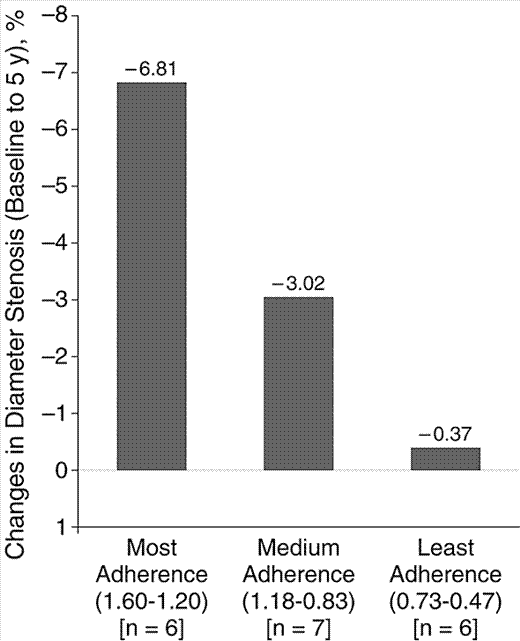
Indian researchers reported similar findings in the Mount Abu Open Heart Trial. This study evaluated a comprehensive lifestyle intervention incorporating a whole-food vegetarian diet, physical activity, Rajyoga meditation, and self-empowerment training in patients with coronary artery disease.
Participants who adhered most closely to the intervention demonstrated significant regression of coronary atherosclerosis and experienced fewer cardiac events during follow-up.
While neither study can isolate the independent effect of stress reduction from the other lifestyle modifications, both demonstrate that programs incorporating stress-management strategies can contribute to meaningful improvements in cardiovascular health.
Preventing Burnout
Because burnout develops gradually, prevention is often more effective than treatment.
Regular physical activity remains one of the most effective strategies for reducing stress and improving resilience. Exercise improves mood, lowers sympathetic nervous system activity, enhances sleep quality, and improves cardiovascular fitness.
Adequate restorative sleep is equally important. Sleep deprivation amplifies stress responses, increases cortisol secretion, and contributes to metabolic dysfunction.
Mindfulness practices, meditation, yoga, and breathing exercises have demonstrated benefits in reducing perceived stress and improving emotional well-being. Even brief daily practices may produce measurable physiological effects.
Strong social connections also appear protective. Individuals with supportive family relationships, friendships, and community engagement tend to exhibit lower levels of chronic stress and better cardiovascular outcomes.
Spending time in nature, maintaining hobbies, practicing gratitude, and establishing healthy work-life boundaries may further reduce the risk of burnout.
Importantly, individuals should recognise that self-care is not a luxury. It is an essential component of long-term cardiovascular health.
Are There Objective Signs That Stress Is Affecting Your Health?
Many individuals experiencing burnout wonder whether stress is affecting their body before disease develops.
Although no single laboratory test can diagnose burnout, several objective markers may provide useful clues.
Heart Rate Variability (HRV)
Heart rate variability reflects the balance between sympathetic and parasympathetic nervous system activity. Lower HRV is commonly observed in individuals experiencing chronic stress and has been associated with increased cardiovascular risk.
Resting Heart Rate
Persistent elevation in resting heart rate may indicate increased sympathetic activation and reduced recovery.
Blood Pressure
Stress-related increases in blood pressure often occur before the development of established hypertension.
Sleep Metrics
Modern wearable devices can provide valuable information regarding sleep duration, sleep efficiency, and sleep fragmentation. Poor sleep is frequently an early indicator of excessive stress.
Waist Circumference
Chronic cortisol elevation promotes visceral fat accumulation. Increasing waist circumference may therefore serve as a visible marker of prolonged stress exposure.
Laboratory Markers
Periodic assessment of fasting glucose, HbA1c, lipid profile, and high-sensitivity C-reactive protein may help identify early metabolic and inflammatory consequences of chronic stress.
Emerging research also supports the use of salivary cortisol measurements and cortisol awakening response testing in research settings, although these are not yet routinely used in clinical practice.
Conclusion
Burnout is often viewed as an emotional or psychological challenge, but growing evidence suggests that its effects extend far beyond mental well-being. Chronic stress and burnout influence autonomic function, hormonal regulation, inflammation, metabolism, and health behaviours, all of which contribute to cardiovascular disease.
Prospective studies and meta-analyses demonstrate a significant association between burnout and coronary heart disease, while lifestyle interventions incorporating stress-management strategies have shown the potential to improve cardiovascular outcomes and even promote regression of coronary atherosclerosis.
The message is clear: protecting mental and emotional health is not separate from protecting cardiovascular health. Caring for the mind may be one of the most important ways to care for the heart.
Key References
- Toker S, Melamed S, Berliner S, et al. Burnout and Risk of Coronary Heart Disease. Psychosomatic Medicine. 2012;74:840–847.
- John A, et al. The influence of burnout on cardiovascular disease: A systematic review and meta-analysis. Frontiers in Psychiatry. 2024.
- Ornish D, Brown SE, Scherwitz LW, et al. Can lifestyle changes reverse coronary heart disease? The Lancet. 1990;336:129–133.
- Gupta SK, Sawhney RC, Rai L, et al. Regression of coronary atherosclerosis through healthy lifestyle in coronary artery disease patients. Indian Heart Journal. 2011.
- Rozanski A, Blumenthal JA, Davidson KW, Saab PG, Kubzansky L. The epidemiology, pathophysiology, and management of psychosocial risk factors in cardiac practice. Journal of the American College of Cardiology. 2005.
- Steptoe A, Kivimäki M. Stress and cardiovascular disease. Nature Reviews Cardiology. 2
Dr Aarti Rathi
MBBS, PGCC, FCR, dipl. (IBLM)
Clinical Cardiologist
Cardiac Rehab Consultant
Lifestyle Medicine Physician
Geriatrician
Dean Ornish Lifestyle Heart Trial
5 years follow up: